



Life has its exhausting seasons, and in January 2026, Kenneth Ruth figured he was in the midst of one of them.
Ruth, 49, and his husband had recently moved to Charlotte from the Brooklyn borough of New York City, and Ruth was starting the search for a new elementary school teaching job. But sitting on the exam table during a routine checkup with his new primary care doctor, the reason behind Ruth’s growing tiredness showed up loud and clear: a heart murmur.
The physician heard it through a stethoscope and sent Ruth for tests that quickly determined that his mitral valve was failing and in need of surgical repair.
“I’d just assumed being tired was part of the stress of moving to a new city and all the things that life was throwing at me,” Ruth recalled.
Once the reality of his diagnosis set in, Ruth dove headfirst into research, devouring everything he could find about mitral valve surgery — from traditional open-chest (sternotomy) procedures to newer, less invasive approaches.
People are also reading…
Luckily for Ruth, a new option had just arrived in Charlotte that reshaped the trajectory of his recovery — robotic mitral valve surgery, which offers patients smaller incisions, less bleeding, and a faster, less painful return to normal life.
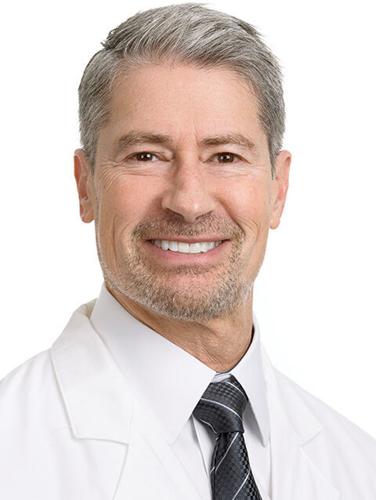
Just months earlier, Dr. Jeffrey Everett, a nationally renowned cardiothoracic surgeon, had come to Novant Health to lead the region’s first dedicated robotic mitral valve program — bringing an advanced approach that opened new possibilities for patients like Ruth.
Little did Ruth know that procedure would have him lacing up his tennis shoes and heading out on miles-long walks just weeks after his surgery.
When fatigue signals something more serious
The mitral valve is a small but crucial gateway between the heart’s left atrium and left ventricle, which opens and closes to keep blood moving from the lungs to the body. When the valve wears out, it fails to close completely, causing blood to flow backward, called mitral valve regurgitation.
That’s what was happening inside Ruth’s heart.
Ruth’s condition wasn’t an immediate life-or-death scenario, but he wasn’t going to feel better until he had surgery, and would face increasing fatigue and related conditions like atrial fibrillation. Mitral valve problems often run in families, and Ruth’s father had undergone open-chest surgery to replace his mitral valve about a decade earlier.
To Everett, Ruth was a strong fit for robotic surgery: He was still in his 40s, fit, and otherwise healthy, and his leaky valve had been caught before damage was done to his heart.
“You add all those up together, and that’s really what makes him the perfect candidate,” Everett said.
A different approach — and a different recovery
Surgery day was March 23. Ruth and his husband, Garrett Tezanos, arrived at Novant Health Presbyterian Medical Center well before dawn. Ruth did his best to stay calm while his care team buzzed around him, prepping him for surgery.
“I’m not a person who particularly enjoys having other people take care of me,” he said.
It was an intense few hours before he was rolled into the operating room, but the steady hands of the nurses and physicians “made it a really positive experience,” Ruth said. “They were so calm and self-assured. That transfers to the patient, when people clearly know what they’re doing and they’re just making it happen.”
Everett has spent decades repairing hearts, but the stress patients face isn’t lost on him.
“That must be one of the more unnerving things we as humans can do, is go through heart surgery. I tell people, nobody signs up for this stuff,” Everett said. “It’s hard to get yourself emotionally ready to do that.”
Ruth’s surgery, which lasted about four hours, was a success.
Everett repaired the valve through small ports between Ruth’s ribs, using 3D visualization and precise robotic instruments.
In addition to repairing the mitral valve, Everett also closed a hole in Ruth’s heart. (About 20% of the population have a hole between the atrial chambers that fails to seal off after birth. Ruth’s was wide open, Everett said.) He also sewed off a small sac where blood clots can form, helping lower the risk of a stroke.
Ruth spent the first night after surgery in the ICU, as is customary, and then was transferred to a regular room.
With each passing hour, he felt stronger and his pain lessened. Even members of his care team, accustomed to caring for patients recovering from open-chest procedures, were struck by how well he was doing.
“I would have nurses swoop into my room in a panic because they saw me bending down to pick something up, and I would have to explain to them, ‘No, I didn't have the sternotomy. I can do this,’” Ruth recalls. “They would breathe a sigh of relief.”
Ruth went home after just two nights in the hospital, with no lifting restrictions. By contrast, patients recovering from mitral valve surgery with a sternotomy often stay in the hospital four to five nights, face lifting restrictions for three months, and may need cardiac rehabilitation.
Ruth experienced tenderness in the incision sites and in areas where muscles had been disturbed by the robotic arms. He quickly learned what movements caused pain and avoided those while he was healing. By the fourth day after surgery, he didn’t need pain medicine.
He tired easily during the first couple of weeks after surgery and sometimes needed to rest even after routine tasks like taking a shower. But the recovery climb was steady.
Back on his feet in weeks
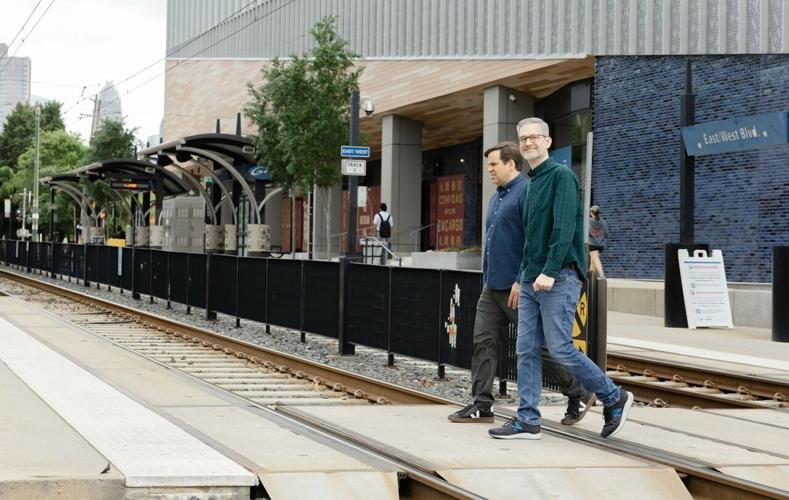
Two days shy of the one-month anniversary of his surgery, Ruth walked four miles on the Rail Trail in Charlotte’s South End.
Ruth said he “needed a big nap” after the walk, but he marveled at how far he’d come.
Now, he and Tezanos are on the cusp of exciting changes — a move into a home in Charlotte that they just purchased, and a new substitute teaching job for Ruth.
Thanks to the robotic surgery performed by Everett, Ruth has the energy to take them on.
“I feel extraordinarily lucky that this was available to me and that I was a candidate for it,” he said. “Everything just seemed to fall into place for me in a way that I don’t take for granted.”


