


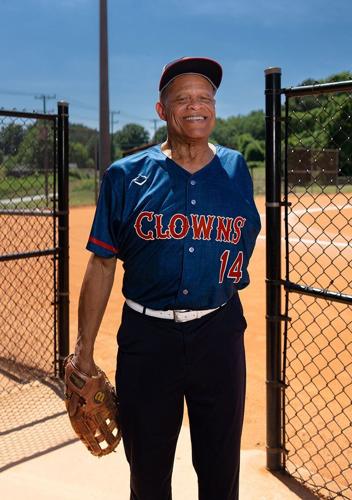
"No one wants to lose their arm," Steve says with a shrug, "but there is a silver lining."
Steve Anderson and I are sitting across from each other in the dugout of a local ballpark. It is a good shady spot that fits the theme of our interview, a tribute to his life in sports, both in the Negro Leagues and in the city’s Recreation and Parks Department.
The sleeve of his Indianapolis Clowns jersey is folded inward, where his left arm would be. He lost it at six years old when he was hit by a truck. Steve is 78 now. He has an easy smile and the slow, elegant voice of a natural storyteller.
"It may sound strange," he tells me, but this great life he has led in and around sports, "probably wouldn’t have happened without losing that arm."
Back in 1947, Jackie Robinson famously broke Major League Baseball’s color barrier, and the top talent from the Negro Leagues poured into MLB. It was a great victory for integration, but when the fans followed the players, the Negro Leagues were left in the lurch.
People are also reading…
Their solution was barnstorming.
By the time Steve was playing for the Indianapolis Clowns in the 1960s, the team had pivoted to become what Steve calls "the Harlem Globetrotters of baseball." It was a combination of baseball and a highly entertaining show featuring acrobatics, play with an imaginary ball, a 4’ 5” player at shortstop, and Steve, the one-armed first baseman that his teammates affectionately called Nub.
"Times change," he says, anticipating questions about this mix of disability and entertainment. "Ethics change." But the great constant was respect for the athletes on the field. To hear Steve tell it, it was not the disability that was on display but the spectacular way the disability was overcome. That is what brought the fans to their feet.
Steve grew up playing with eight guys in his neighborhood in Advance, where he discovered his natural athletic ability. He also discovered that, despite a missing arm, when it came to sports, he could adapt. So much so that by the early 1960s, he was playing semi-pro ball with the Mocksville Braves, and by the mid-1960s he had been picked up by the Clowns.
"So, when you’re playing first base do you play without a glove so you can catch and throw, or…?"
"No, no." He mimes it for me. "I catch the ball then tuck the glove under my chin… roll my hand out, down, and 99.99 percent of the time the ball falls right into my hand."
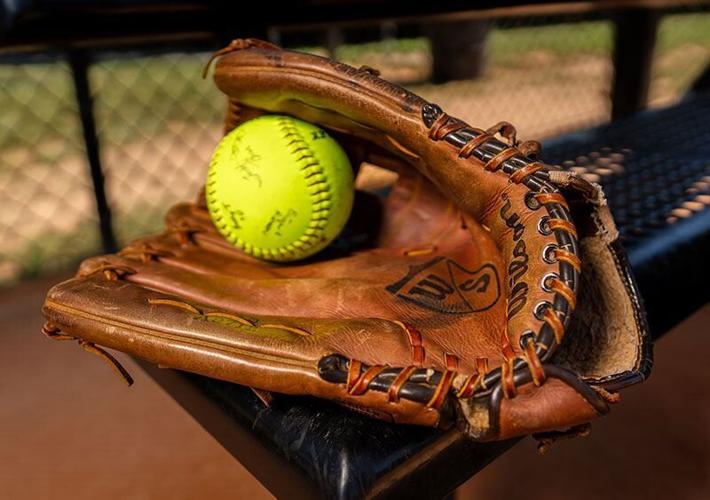
Steve brought his old glove and a ball, so we step onto the field where he can demonstrate. He says he has not done it in decades, but when I toss the ball, sure enough, he does this whole catch-tuck-roll move in one smooth motion and the ball does drop right into his hand.
"I was blessed to have initiated a couple of double plays in my career," he tells me, in humble tones.
I imagine a young, scrappy, one-armed kid in Advance figuring out how to play ball with the other neighborhood boys and perfecting this technique. He not only kept up with the kids, he got to the semi-pros and the Negro Leagues. It is impressive.
"The crowd used to really cheer when they’d see that," he says.
Ironically, his fame might have been even greater but, "Many people in the stands thought I was faking that I had one arm – hiding the other one in my loose uniform. When little kids would come down with their dads to get autographs, they’d end up touching me on my left side to verify. I suspect there was some parental involvement there." He laughs.
Steve’s batting was equally impressive, with an average of 271. It is a statistic that could have been higher, but the team owners encouraged him to get under the ball and hit long, high flies, crowd pleasers that drew ooohs and aaaahs from the stands. He smiles, remembering it.
Wisely, Steve did not rely on sports alone to build a career. He made a living with Wachovia Bank, but still managed to find a position on the company baseball team, which he says had the best name of any team he was ever on: The Loan Rangers.
Today, as a field man for the city of Winston-Salem’s Recreation and Parks Department, Steve sets up the bases on the field, chalks the lines, shouts encouragement to the players, and generally plays host, all so other athletes can experience a bit of that same magic of the game.
"It seems like, with your bank team and your career here as a field man, there’s just something about sports that keeps bringing you back."
"Sports has been a great part of my life for sure. I’ve been blessed with doing something I would have done anyway. I’d probably be at the ballpark anyway watching the games. I say, some days we ought to turn our paychecks in because it’s a labor of love."
Jeremy Cole is a recent transplant to North Carolina, where he works in marketing and communications for the City of Winston-Salem. His ongoing series, Winston-Salem Stories, is an appreciation of our history, our warm culture, and our people, whose everyday actions create meaningful impact across this community. You can read more about his family’s experiences discovering and settling into their new home at https://substack.com/@jeremycole/posts.


